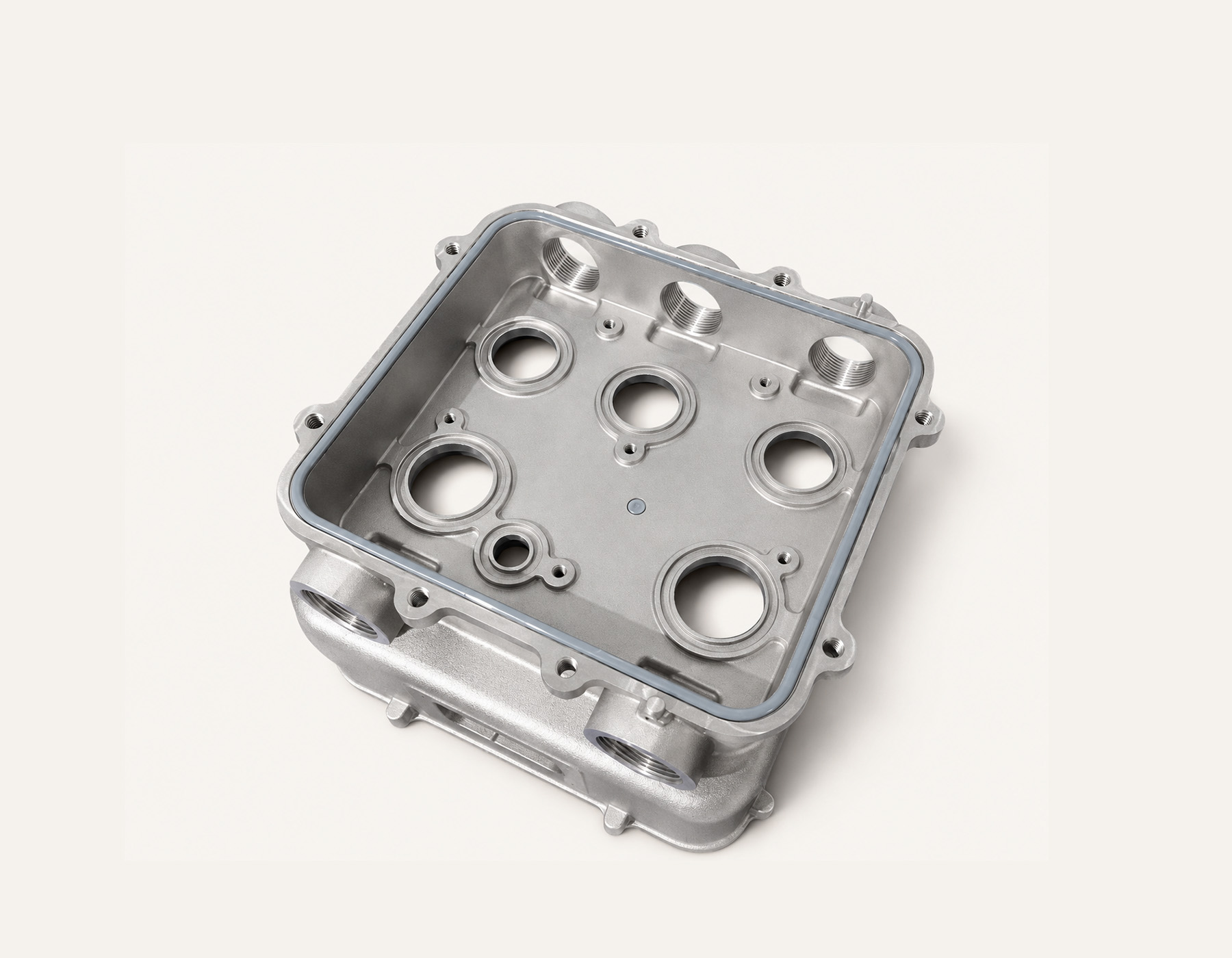
Aluminum die cast parts with tooling, secondary machining, surface finishing and inspection support.
Upload Drawings for Quote
From die design to finished components, ENSI supports aluminum die casting with secondary machining, surface finishing and assembly under one project.
Die design, tooling and aluminum die casting for housings, brackets and structural parts.
Critical faces, bores and threads machined after casting to drawing tolerances.
Shot blasting, coating, plating and assembly coordinated as one project.
Alloy and finish selections are reviewed according to part geometry, function, appearance and production requirements.
Final alloy selection is confirmed after drawing review, against function, machining and finish requirements.
View Materials GuideFinish availability, color, masking and dimensional impact are confirmed during quotation.
Explore Surface FinishesEach die casting project is reviewed against part geometry, tooling, machining, finishing and inspection requirements before production begins.
| Part Size | Confirmed after drawing review |
| Casting Material | Aluminum die casting alloys; final alloy confirmed after drawing review |
| Tooling Support | Die design and tooling coordinated per project |
| Secondary Machining | CNC milling and turning for critical features after casting |
| Surface Finishing | Shot blasting, polishing, powder coating, spray painting and plating |
| Inspection | Critical dimensions checked during production and before shipment |
| Production Quantity | Low-to-medium volume production; quantities confirmed at quotation |
| Lead Time | Confirmed with the quotation after drawing review |
Tooling scope, casting size and achievable tolerances depend on part geometry — each is reviewed and confirmed individually during drawing review.
Drawings are reviewed before tooling to identify casting, machining, finishing and assembly risks.
Cast faces need draft to release from the die; required angles are reviewed against geometry.
Uniform walls fill and cool predictably; abrupt changes can cause porosity or distortion.
Ribs and bosses are reviewed for fill, sink and strength around mounting points.
Parting-line position affects appearance, flash and downstream machining.
Ejector marks are placed away from cosmetic and sealing surfaces where possible.
Faces machined after casting need allowance built into the casting geometry.
Identify the dimensions that matter functionally so machining and inspection focus where it counts.
Flag cosmetic faces so gating, ejection and finishing protect them.
Specify coating type, color and any areas that must stay uncoated.
Mating parts, inserts and hardware are reviewed as one assembly.
Provide both a 3D CAD model and a 2D drawing when the project includes critical dimensions, machined features, or finish requirements.
Send Drawings for ReviewFrom drawing review to final delivery, every die cast part follows a controlled process across tooling, casting, machining and finishing.
Start your projectSend CAD files with material, quantity, tolerance, finish and assembly requirements.
Draft, wall thickness, parting line, machining and finishing requirements are checked.
Die design, tooling scope and the casting plan are confirmed before tooling begins.
Parts are cast, then machined and finished with critical steps controlled throughout.
Dimensions and surfaces are verified, then parts are packed and shipped securely.
Die design and tooling, aluminum die casting, secondary CNC machining, surface finishing and assembly — coordinated as one project from drawing to delivered parts.
Yes. Die design and tooling are coordinated per project, with scope and cost confirmed during drawing review and quotation.
Aluminum die casting alloys. The final alloy grade is confirmed after drawing review, against function, machining and finish requirements.
Yes. Critical faces, bores and threads are machined after casting to drawing tolerances, with machining allowance reviewed before tooling.
Shot blasting, polishing, powder coating, spray painting and plating, alongside as-cast and machined surfaces. Color and masking are confirmed at quotation.
Low-to-medium volume production. Quantities, batch sizes and repeat-order planning are confirmed at quotation.
Critical dimensions and surface requirements are checked during production and before shipment, against the approved drawing.
STEP or STP files work best, along with a PDF drawing showing critical dimensions, machined features, finish and assembly requirements.
Upload your drawings for alloy, tooling, machining, tolerance and finishing review. ENSI will review the project and confirm the next manufacturing steps.